Search intent is one of the most important concepts in modern SEO. It refers to the purpose behind a user’s search query, what the user actually wants to find when they type something into Google.
Understanding search intent helps search engines deliver relevant results and helps website owners create content that satisfies user needs.
Even if a page ranks well in search results, it may still receive low clicks if the content does not match what users are looking for. This mismatch between content and user expectations is known as search intent mismatch.
Learning how search intent works allows you to align your content with what users truly want, improving both rankings and engagement.
What is Search Intent?
Search intent refers to the goal or purpose behind a search query. It explains why a user performs a search and what type of information they expect to find.
For example, when someone searches for: what is ctr in seo
they are likely looking for a definition or explanation.
But when someone searches for: best seo tools
they may be looking for recommendations or comparisons.
Although both queries relate to SEO, the intent behind them is different.
Search engines analyze user behavior and query patterns to determine the most relevant type of content for each search.
Why Search Intent Matters for SEO
Search engines aim to provide results that best satisfy the user’s intent. This means that ranking high in search results is not only about keywords but also about how well the content aligns with what users expect.
If a page targets the correct keywords but fails to satisfy the search intent, it may receive impressions but very few clicks.
For example, a page explaining SEO impressions may appear in search results for related queries. However, if users are actually searching for strategies to increase impressions rather than definitions, the page may not receive many clicks.
Understanding search intent helps improve:
- content relevance
- click-through rates
- user satisfaction
These factors contribute to better overall SEO performance.
Types of Search Intent
Search intent is generally categorized into four main types.
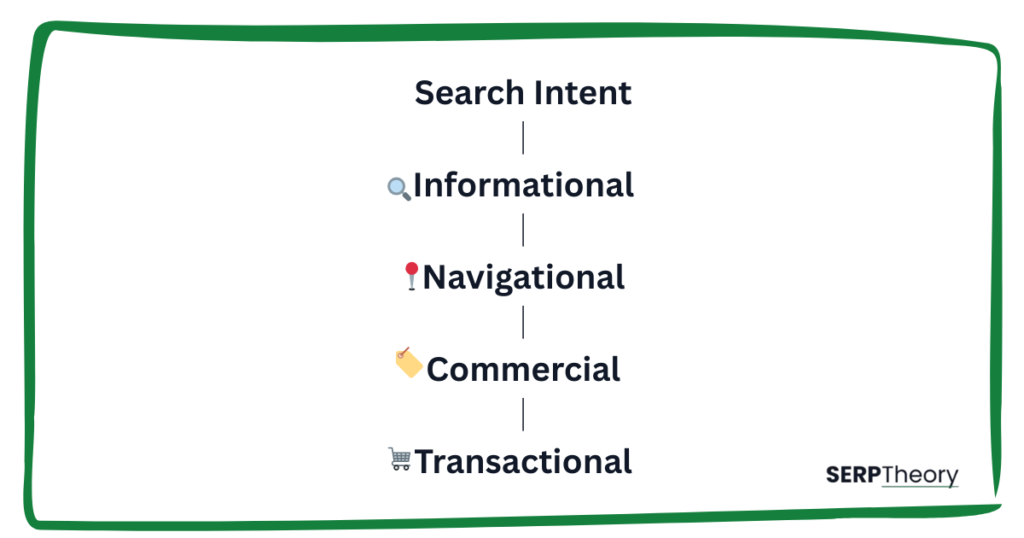
Informational Intent
Users with informational intent want to learn something or find an explanation.
Examples:
- what is search intent in seo
- how google ranking works
- what are impressions in search console
Content that satisfies informational intent usually includes guides, tutorials, and explanations.
Navigational Intent
Navigational intent occurs when users are searching for a specific website or brand.
Examples:
- google search console login
- ahrefs blog
- youtube homepage
In these cases, users already know where they want to go.
Transactional Intent
Transactional intent indicates that a user is ready to make a purchase or take a specific action.
Examples:
- buy seo tools
- seo course price
- best hosting for wordpress
These searches usually lead to product pages or service pages.
Commercial Investigation
Commercial investigation occurs when users are comparing options before making a decision.
Examples:
- best seo tools
- semrush vs ahrefs
- top keyword research tools
These queries often lead to comparison articles and reviews.
Search Intent and Google Rankings
Google’s ranking systems prioritize content that best matches search intent.
For example, if the search query is informational, Google is more likely to rank:
- guides
- explanations
- educational articles
Instead of:
- product pages
- sales pages
This means that the type of content you create must match the expected format of the search results.
One way to understand search intent is to analyze the top results for a query. If most top-ranking pages are guides or tutorials, Google likely considers the query informational.
Search Intent Mismatch
A search intent mismatch happens when the content of a page does not match what users are looking for.
For example:
If users search for: increase website traffic
but your page only explains what website traffic means, users may leave quickly or ignore the result entirely.
This can lead to situations where a page receives many impressions but very few clicks.
A deeper explanation of this phenomenon is covered in our article on why impressions increase but clicks don’t.
Even pages with a strong average position in Google Search Console may receive fewer clicks if the search intent does not match the content.
How to Identify Search Intent
There are several ways to determine search intent.
Analyze the Search Results
Look at the top-ranking pages for a keyword. Identify what type of content appears most frequently.
Look at SERP Features
Search engine results pages may include:
- featured snippets
- videos
- product listings
These features provide clues about the dominant search intent.
Examine User Language
Words such as “how”, “what”, or “best” often signal different types of intent.
Optimizing Content for Search Intent
To align your content with search intent, consider the following strategies.
Study Existing Results
Understanding what already ranks helps identify what users expect to see.
Provide Clear Answers
Content should directly address the user’s question or problem.
Structure Content Clearly
Using headings, examples, and explanations helps readers quickly find the information they need.
Match the Content Format
If top results are tutorials or guides, your content should follow a similar format.
Search intent plays a critical role in how search engines rank content. It helps determine whether a page satisfies the needs of users searching for a particular topic.
Rather than focusing only on keywords, successful SEO strategies focus on understanding the purpose behind each search query. By aligning content with search intent, websites can improve visibility, engagement, and overall search performance.
This article is part of our SEO Foundations series explaining key concepts behind search performance.
Frequently Asked Questions
What is search intent in SEO?
Search intent refers to the purpose behind a user’s search query and what the user expects to find in the search results.
Why is search intent important?
Matching search intent helps search engines deliver relevant results and improves the chances of ranking higher in search results.
What happens if search intent is not matched?
If content does not match the search intent, it may receive impressions but fail to attract clicks or engagement.
How do you determine search intent?
Search intent can be identified by analyzing search results, user queries, and the type of content that ranks for a keyword.